

EMDR: A Powerful, Evidence-Based Therapy for Recovery, Resilience, and Performance
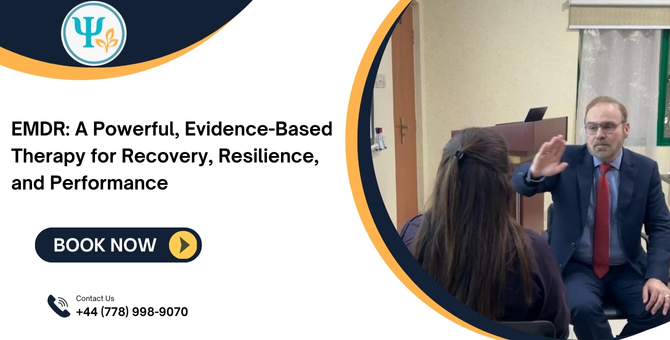
Eye Movement Desensitisation and Reprocessing (EMDR) is a highly effective, evidence-based psychological therapy originally developed for the treatment of trauma. Today, EMDR is used internationally to help individuals recover from a wide range of emotional and psychological difficulties, while also supporting resilience, clarity, and optimal functioning in professional and corporate environments.
At the UK Centre of Excellence for Psychotherapy (UCEP), EMDR is delivered by accredited clinicians who combine clinical expertise with rigorous ethical and governance standards. Our approach integrates compassion with scientific precision, ensuring that EMDR is both safe and transformative for individuals and organisations alike.
What is EMDR?
EMDR is a structured therapy that helps the brain process distressing memories, experiences, and emotional blocks that may be holding a person back. When difficult or traumatic experiences are not fully processed, they can remain “stuck” in the nervous system, continuing to trigger distress, anxiety, reduced confidence, or impaired performance.
EMDR supports the brain’s natural capacity to heal by using bilateral stimulation (such as guided eye movements, tapping, or sounds) while focusing on specific memories or experiences. This helps the brain reprocess them so they no longer feel overwhelming or disruptive.
People often describe EMDR as helping them:
- Feel calmer and more grounded
- Gain emotional distance from painful memories
- Restore confidence and self-belief
- Improve focus and decision-making
How EMDR works
EMDR is based on the understanding that the brain has an inherent ability to process and integrate experiences. Under stress or trauma, this natural system can become disrupted.
In EMDR therapy:
- You remain fully aware and in control
- There is no need to describe traumatic experiences in detail
- The therapist guides the process in a safe and structured way
- Distress reduces as memories become integrated into long-term adaptive memory
EMDR does not erase memories; instead, it changes how they are experienced so they no longer carry the same emotional intensity or negative beliefs.
A therapy grounded in strong scientific evidence
EMDR is one of the most extensively researched trauma-focused therapies in the world. It is recommended by international clinical guidelines and widely recognised by healthcare systems, insurers, and professional bodies.
In the UK, EMDR is endorsed by the National Institute for Health and Care Excellence (NICE) for the treatment of post-traumatic stress disorder (PTSD). Its effectiveness has also been demonstrated across many other psychological difficulties.
This makes EMDR a trusted intervention for:
- Individuals seeking recovery from trauma
- Organisations supporting staff wellbeing and resilience
- High-pressure professions where emotional regulation and performance are critical
Conditions EMDR can help with
EMDR is most widely known for treating trauma and PTSD, but it is also effective for:
- Anxiety disorders and panic
- Depression linked to adverse life experiences
- Phobias
- Performance anxiety and confidence difficulties
- Complex grief and loss
- Attachment and relationship difficulties
- Stress-related conditions and burnout
- Medical trauma and chronic illness adjustment
For organisations, EMDR can support individuals who have experienced:
- Workplace trauma or critical incidents
- Bullying or harassment
- Prolonged occupational stress
- High-risk professional exposure (e.g. healthcare, emergency services, leadership roles)
EMDR in professional and corporate contexts
EMDR is not only a therapy for crisis recovery; it is also a powerful tool for restoring and strengthening professional functioning.
In corporate and high-responsibility environments, EMDR supports:
- Emotional regulation under pressure
- Recovery from stress-related impairment
- Clearer thinking and decision-making
- Sustainable performance
- Psychological resilience and leadership presence
It is particularly effective where individuals feel “stuck,” reactive, or blocked despite high levels of competence.
What an EMDR session involves
EMDR therapy follows a carefully structured, eight-phase approach that ensures safety, stability, and effectiveness. Sessions are collaborative and paced according to individual needs.
Typically:
- Sessions last between 60 and 90 minutes
- The number of sessions varies depending on complexity
- Therapy may be short-term or part of a broader care pathway
Before processing begins, time is spent building:
- Emotional safety
- Stability
- Trust in the therapeutic process
This makes EMDR suitable even for people who feel anxious about discussing past experiences.
EMDR alongside other treatments
EMDR can be:
- Used on its own
- Combined with CBT or other psychological approaches
- Used alongside medication when clinically appropriate
At UCEP, therapy planning is always personalised and grounded in best clinical practice.
A compassionate and empowering approach
EMDR is not about reliving the past. It is about enabling the nervous system to release what it no longer needs to carry. Many people experience EMDR as:
- Deeply relieving
- Empowering
- Restorative
- Clarifying
For professionals, it often marks a turning point where confidence, presence, and effectiveness are restored.
Clinical governance and professional standards
All EMDR therapy at UCEP is:
- Delivered by accredited and highly trained practitioners
- Governed by strict ethical and clinical frameworks
- Outcome-informed and evidence-based
- Suitable for both private individuals and organisational commissioning
This ensures confidence for patients, employers, and professional stakeholders.
EMDR at UCEP
At the UK Centre of Excellence for Psychotherapy, EMDR is offered as part of a comprehensive, trauma-informed, and excellence-driven care pathway. We work with:
- Individuals and families
- Professionals in high-responsibility roles
- Organisations and occupational health services
- Corporate wellbeing and leadership programmes
Our approach combines clinical depth, ethical rigor, and strategic understanding of real-world demands.
In summary
EMDR is a powerful therapy that supports:
- Recovery from trauma
- Emotional stability
- Psychological resilience
- Sustainable professional performance
It bridges the gap between healing and high-level functioning, making it uniquely valuable for both individuals and organisations.
